
Genomics data analysis: from variants to whole genomes
Variant detection, liquid biopsy, genome assembly and comparative genomics: Sycomia analyzes your DNA sequencing data end to end, with a strategy built around your biological question.
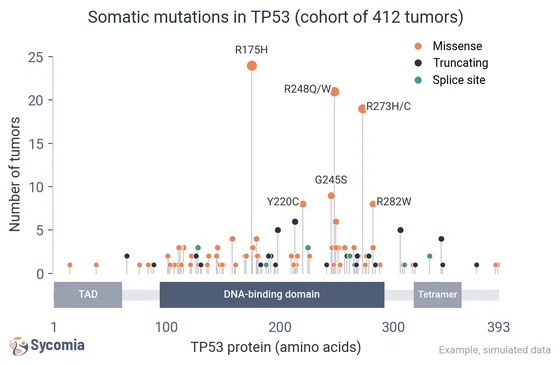
Variant analysis
Whole-genome (WGS) or whole-exome (WES) sequencing reads the DNA of an individual or a tumor. Variant analysis finds the differences from the reference genome, from point mutations to structural variants, then annotates them to identify those with a biological or clinical effect.
Example analyses
- Germline and somatic variant callingSNVs, indels, copy number and structural variants detected from whole-genome or whole-exome data, delivered as annotated and filtered variant sets, ready for interpretation in research and clinical research.
- Annotation and prioritizationClassification of variants by functional impact, population frequency (gnomAD), clinical significance (ClinVar) and predicted pathogenicity, to focus on the relevant mutations.
- GWAS and fine-mappingStatistical analysis of large cohorts to identify variants associated with traits or diseases and prioritize those with a likely functional impact.
- Mutational signaturesExtraction and interpretation of signatures based on the trinucleotide context of somatic mutations, to reveal the underlying mutagenic processes.
- Population genomicsAnalysis of genetic variation across populations to describe their structure, diversity and evolutionary history.
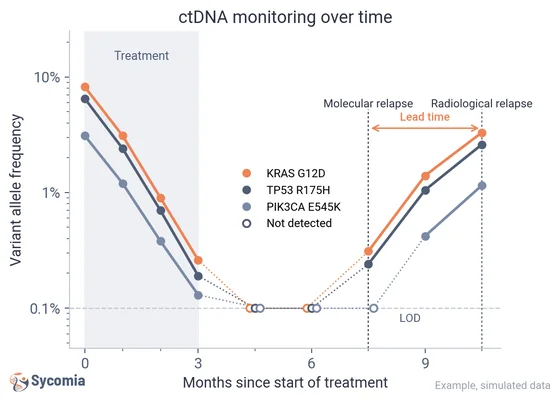
ctDNA and liquid biopsy
Liquid biopsy analyzes the cell-free DNA in the blood, including the fragments released by the tumor (ctDNA). With very deep sequencing and unique molecular identifiers, mutations present at very low levels can be detected and followed during and after treatment.
Example analyses
- Ultra-deep sequencing with UMIUnique molecular identifiers group the reads from each original DNA molecule to correct sequencing errors, for highly sensitive detection of rare mutations at low allele frequency.
- Tumor-informed monitoringMutations identified in the tumor followed in successive blood samples, to detect residual disease and molecular relapse before it shows on imaging.
- Tumor fractionQuantification of the tumor-derived fraction of circulating DNA, to track disease burden during and after treatment.
- A multi-platform pipeline in developmentOur research project combines Illumina, Oxford Nanopore and PacBio, with AI models that merge the genomic and epigenomic signals carried by long reads. Discover our research.
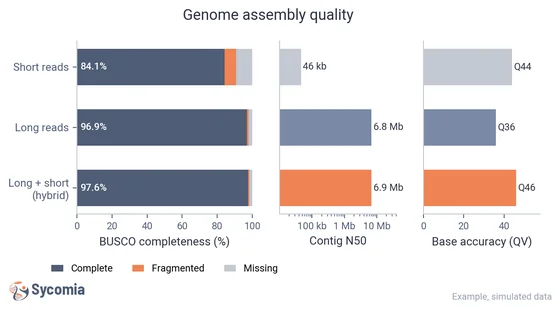
Genome assembly and annotation
When no reference genome exists, or to study a specific strain, the genome is rebuilt from sequencing reads. Long reads span repeated regions and give much more contiguous assemblies, and short reads can be added to polish base accuracy. The genome is then annotated to locate genes and their functions.
Example analyses
- De novo assembly (short, long or hybrid reads)Genomes reconstructed from scratch with pipelines tailored to your organism and data, including non-model species: long reads for contiguity, short reads to polish accuracy when needed.
- Assembly quality controlGene completeness (BUSCO), base accuracy (Merqury QV), contiguity and contamination screening, to know how far each assembly can be trusted.
- Haplotype-resolved assemblySeparate assembly of the two copies of each chromosome, from parental data (trio) or Hi-C, to study allele-specific variation and inheritance.
- Genome annotationRepeat masking, gene prediction supported by RNA-seq evidence, and functional annotation (GO terms, KEGG pathways).
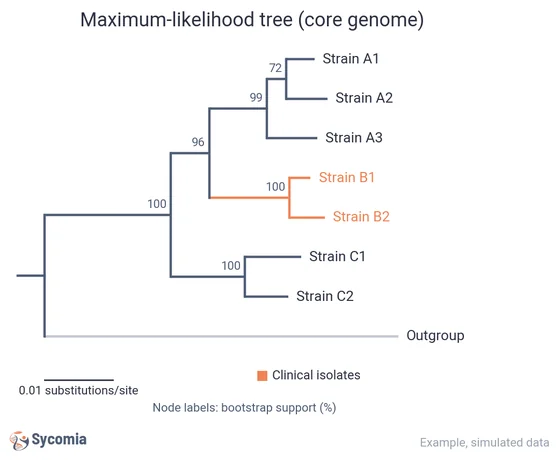
Comparative genomics
Comparative genomics places several genomes side by side to understand what they share and what sets them apart: shared genes or genes specific to a species or strain, rearrangements, evolutionary history.
Example analyses
- Orthologs and paralogsPrecise identification of orthologous and paralogous genes to study gene evolution and functional conservation.
- Synteny and rearrangementsAnalysis of conserved gene order and detection of inversions, translocations and duplications between genomes.
- PhylogenomicsPhylogenetic trees built from multiple genes or whole genomes to reconstruct the evolutionary history of species or populations.
- Pan-genome analysisCore and accessory genes across the genomes of a species, to reveal what all strains share and what varies between them.
Your analysis is not on the list? We also build custom analyses, tailored to your biological question. Let’s talk
Frequently asked questions
Another question about your project? Write to us, an expert will answer.
Contact usDo you analyze whole genome and whole exome data?
Yes. We process WGS and WES data with a validated variant calling pipeline, then annotate and prioritize the variants according to your question.
Do you work with long-read sequencing?
Yes. Long reads are especially useful for genome assembly, alone or combined with short reads in hybrid assemblies, and for complex regions.
Can you work on non-model organisms?
Yes. We assemble and annotate genomes de novo, including for understudied species, and compare them with related genomes.
Is my data kept confidential?
Yes. We sign an NDA on request, before any exchange of data. Your data is processed on our own servers, clinical data is hosted in France by a certified health data host (HDS), and your data is deleted within 30 days of the end of the project, or earlier on request, in line with the GDPR.
Related services
Let’s talk about your genomics project
Variants, ctDNA, assembly or comparative genomics: tell us about your biological question and your data, and we will propose the right analysis strategy.